For decades, psychotherapy and medication have been seen as the two main paths for treating mental health problems. But new research published in Nature this week suggests a third, revolutionary path is emerging — one that aims not to simply manage symptoms, but to heal the mind at its roots.
🧠 Reference: “The promise of psychedelic medicine in psychiatry,” Nature (16 October 2025) Read the original article here.
A New Paradigm in Psychotherapy
The Nature feature highlights a growing field known as psychedelic-assisted psychotherapy, where compounds such as psilocybin (the active ingredient in “magic mushrooms”) and MDMA are used under controlled, clinical supervision.
Unlike conventional antidepressants that may take months to stabilise mood, these treatments focus on brief but deeply transformative sessions, designed to help patients process emotional pain and trauma at a profound level.
Early trials have shown significant and lasting reductions in symptoms of depression, PTSD, and end-of-life anxiety — even after just one or two guided sessions.
What Makes It Different
At the heart of this new approach is an idea that feels both ancient and radical: that healing requires connection — to self, to others, and to meaning. Psychedelics appear to temporarily “quiet” parts of the brain that trap people in repetitive, anxious thought loops, creating space for new insights and emotional release.
Patients describe it as “seeing themselves without judgment” — a kind of clarity traditional talk therapy sometimes takes years to reach.
But crucially, the therapy surrounding these experiences is what anchors the change. Integration sessions before and after dosing help translate powerful emotional revelations into lasting personal growth.
The Cautions and the Hope
Nature’s article also emphasises the need for caution. These substances are still under investigation; improper use can trigger distressing experiences or worsen certain conditions. Researchers are calling for strict clinical guidelines, ethical oversight, and trained therapeutic support to ensure safety and effectiveness.
Still, the momentum is building. Regulatory bodies in several countries are beginning to recognise the therapeutic potential — with MDMA-assisted therapy for PTSD and psilocybin-based treatments for depression both progressing toward approval.
What This Means for the Future of Psychotherapy
If these findings continue to hold, psychotherapy could soon look very different.
Therapists may work in teams with medical professionals to guide clients through powerful emotional journeys, rather than long-term talk-based models alone.
It’s not about replacing therapy — it’s about deepening it.
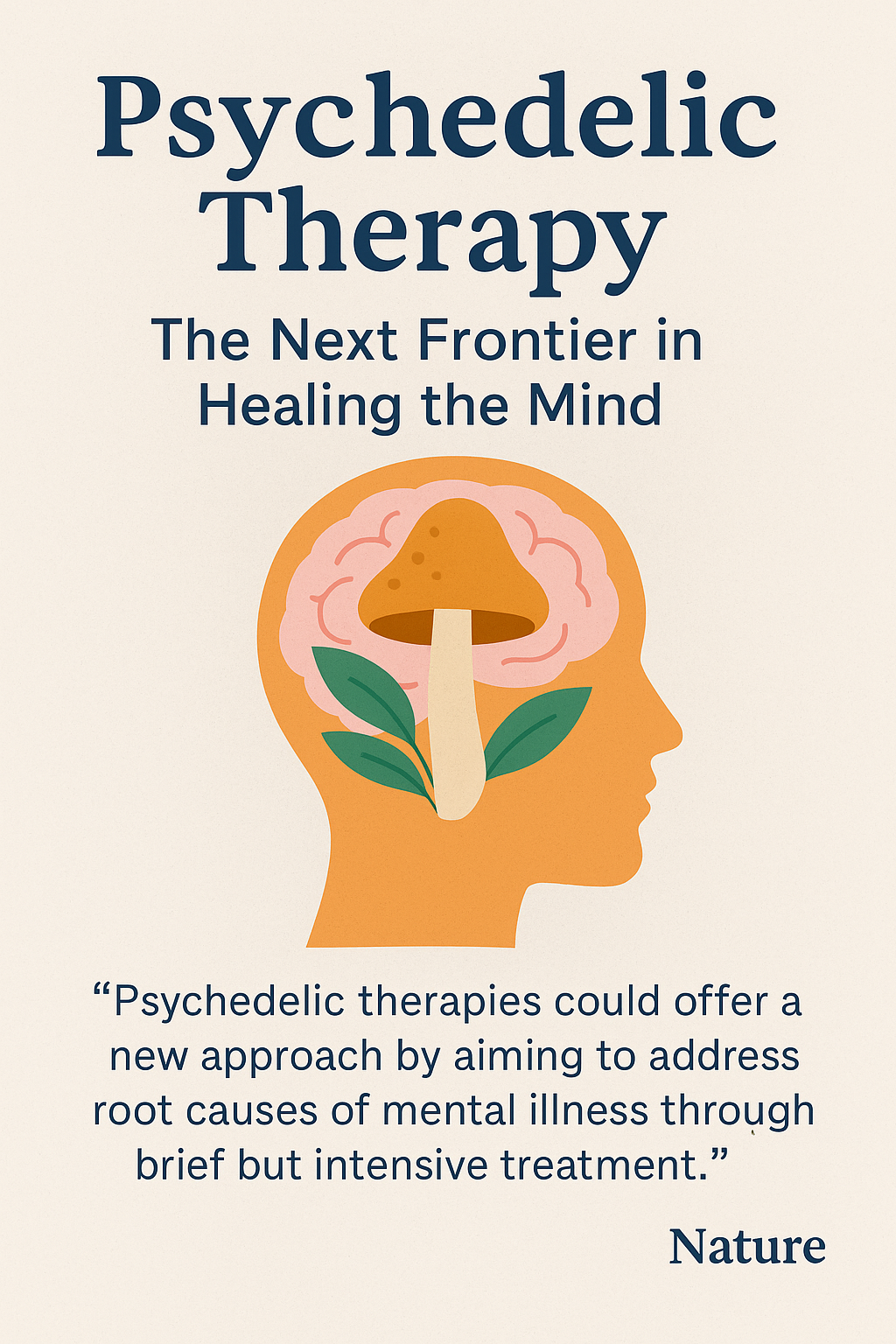
“Psychedelic therapies could offer a new approach by aiming to address root causes of mental illness through brief but intensive treatment.” — Nature, 2025
Final Thoughts
The world of psychotherapy is evolving. As science continues to explore the connection between the brain, the mind, and consciousness itself, one thing is clear: healing isn’t just about managing the mind — it’s about transforming it.